
Three Walworth County Property Values Answer Different Questions
Three different figures get called a Walworth County property value. Each one answers a different question. The local assessor places an assessed value on the tax roll. An estimate of market value is a valuation concept used in that assessment work. A last sale price lives in the recorded deed or transfer-return record. Wisconsin DOR's equalized value and assessment-ratio measures work at broader scales. Know which figure you hold. Then you can stack it against another.
| Value | What It Is | Where |
|---|---|---|
| Assessed value | Value used in the local assessment roll for taxation | Municipal assessor / Ascent |
| Market value | Value concept used in the assessment process | Assessment record and Wisconsin DOR guidance |
| Last sale price | Consideration tied to a recorded conveyance | Transfer return or deed-related record |
| Equalized value | Statewide municipal value measure for comparison and distribution | Wisconsin DOR reports |
An assessed value exists for taxation. It is not a promise of what a buyer will pay. For one parcel, the property-specific assessment ratio compares the assessed amount against an estimate of market value. A municipal assessment level aggregates sales and assessments for a whole jurisdiction. A recorded sale can differ for many reasons. Timing, condition, terms, or whether the sale qualified for ratio analysis at all can all play a part.
Walworth County Assessment Ratios Describe a Municipality
Wisconsin DOR publishes municipal aggregate ratios by jurisdiction and year. These numbers show how local assessments compare with market evidence, and they feed equalized-value calculations. They are not a ratio for any single parcel. They also never replace the assessor's property-specific record. Check the municipality and reporting year before reading meaning into a ratio.
An individual ratio uses one parcel's assessed amount and an estimate of its market value. An aggregate ratio summarizes a broader sample. A sale that is not arm's length, conveys only a partial interest, or otherwise fails DOR criteria may be left out of the sales analysis. That is why a neighbor's sale does not automatically prove another assessment wrong. See the Wisconsin DOR's municipal aggregate-ratio reports.
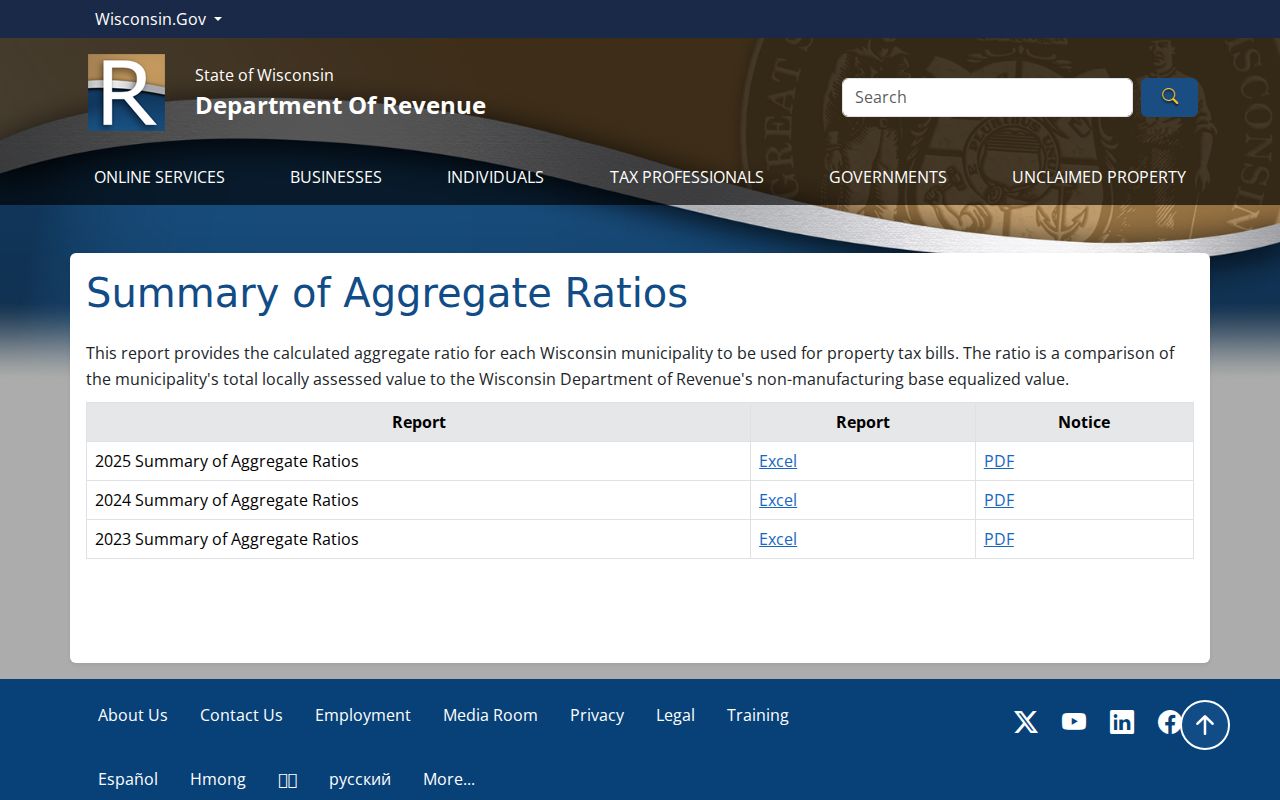
Treat the report as municipal context, and ask the local assessor for the parcel-level calculation.
Walworth County Equalized Value Is Not the Parcel's Assessed Amount
Equalized value is a state measure for a municipality. It is not a replacement figure on an individual parcel card. DOR publications also draw a line between assessment level and assessed value. So keep the unit of analysis straight. The parcel roll describes one property. Equalized and aggregate-ratio publications describe municipal totals or levels.
These measures help explain a lot. An assessment trend and a tax bill trend can move differently. Local levies, district boundaries, and municipal assessment levels all shape the relationship. None of it produces an automatic market appraisal for a particular house.
A Walworth County Sale Record Provides a Price Clue, Not a Valuation
The deed index and transfer-return process can supply a recorded conveyance date. It can also supply consideration-related details. A Walworth County deed detail record may show a QCD, separate conveyance and recording dates, grantor and grantee, a tax parcel, and a displayed transfer fee. Document images route through LandShark. That is useful evidence to compare, but it is not a typical price. It proves nothing about current market value.
Walworth County Parcel Cards May Not Separate Every Value Field
OneView parcel cards do not present a fixed set of land, improvement, current-value, or history labels on every record. A selected parcel can link to a Property Information Report and Ascent tax data, but the exact fields depend on the record and the municipality. Read the field title and assessment year on the live record instead of assuming the card breaks out land and building values.
Look Up a Walworth County Property Value by Tax Key
Find the parcel in OneView or Ascent, then use its tax key to confirm the value belongs to the intended land. The local municipality maintains the roll, while Ascent serves as a county-facing search route. Note the assessment year, value label, and municipality before comparing the amount with a sale or a DOR report.
- Locate the parcel by address or tax key in OneView or Ascent.
- Read the municipality, tax key, value label, and assessment year together.
- Check LandShark for a recorded transfer if a sale reference is needed.
- Use the relevant DOR report for municipal ratio context, not as a parcel appraisal.
- Assessed value
- The value recorded for property-tax purposes.
- Market value
- A valuation concept, not a guaranteed sale amount.
- Assessment ratio
- A comparison between assessed and estimated market value.
Historic Walworth County Maps Put Value Changes in Context
OneView's aerial timeline reaches from 1940 through 2024. The Wisconsin Historical Society keeps an 1891 Walworth County plat book. Old aerial photos and atlas pages show when visible development or street patterns shifted. They do not fix a value at that date, though. They also say nothing about permit status or a current market price.
Treat the maps as context for assessed values and recorded sales. When a parcel seems to have changed substantially, track down the permit or the recorded land division instead of assuming the aerial date matches the assessment date. A historic map points to what to search next. It is not itself a valuation method.
What a Walworth County Assessment Cannot Promise
An assessed value in Walworth County is a tax record, nothing more. It is not an appraisal. No lender will treat it as one. It promises nothing about what a buyer might pay. Markets move. A parcel number can carry one figure on the tax roll while the same property fetches a very different price at sale. Roll changes follow the public assessment process, not the market.
When the tax bill itself is the question, that is a different record. Exemptions, bill amounts, and the objection process all sit with the assessor and the tax roll. The deed and the market value are not the place to look. See the Walworth County property-tax records guide for that side of the ledger.
Value vs price. The assessor's value is used for taxation and is not what a property is certain to sell for. A sale, financing, or valuation decision may require a qualified appraisal.