
What Walworth County Property Tax Records Report
Walworth County property tax records blend assessment and billing information. Different offices stand behind each piece. Municipal assessors maintain the assessment rolls. Ascent Land Records provides the county-facing tax and parcel search. A roll or bill always belongs to a specific year. Field labels and refresh timing vary. Confirm any value or exemption flag against the live record. Ask the municipality before relying on it.
| Field | What It Shows | Where |
|---|---|---|
| Assessed value | Value entered on the local assessment roll for taxation | Municipal assessor; search through Ascent where available |
| Assessment level or ratio | Context for comparing an assessment with market value or a municipality | Wisconsin DOR publications |
| Exemption or classification | Any applicable roll status or property classification | Confirm the entry with the local assessor |
| Tax bill and payment | Amount billed and payment status for a bill period | Ascent or the responsible municipal treasurer |
| Taxing districts | Local jurisdictions reflected in the bill calculation | Tax-bill detail and municipal records |
A Walworth County tax bill starts with the assessed amount. But that figure is not an appraisal. It does not predict what the parcel would sell for today. The final bill also reflects public budgets, levies, and local calculations. Those sit layered on top of the assessment. So a high or low bill, standing alone, tells you little about whether the assessor valued the parcel correctly. Property tax records report the numbers that feed the process, not the market itself.
Ascent and OneView Lead to Different Walworth County Tax Views
Two portals, two different entry points. Ascent Land Records is the county-facing route into property records and tax data. It is built around searching rather than browsing a map. OneView works the opposite way: start with a map, an address, an owner of record, or a tax parcel. Then link that selection to the property information behind it. The practical split is simple. Use Ascent to inspect tax data. Use OneView when a location clue has to identify the parcel first. When matching records between the two, tie them together by tax key and legal description. Do not rely on a similar street label alone.
No single county assessor portal covers every Walworth municipality. Municipal assessors supply the rolls. So questions about the owner of record, classification, assessed amount, or roll dates belong with the assessor for that municipality. Ascent's live search labels and filters should be confirmed directly. The landing page alone does not establish every available option.
Walworth County Assessment Ratios Are Not an Individual Appraisal
An individual assessment ratio compares one property's assessed amount with an estimate of its market value. A municipal assessment level, or aggregate ratio, is broader. It summarizes sales and assessments across a whole jurisdiction, and Wisconsin's Department of Revenue publishes that aggregate-ratio information by municipality and year. Both measures serve assessment and equalization analysis. Neither is a fresh appraisal of one home.
Comparing an assessment against a sale takes care. Make sure the years and definitions line up first. A sale can be excluded from ratio analysis when it is not an arm's-length transfer, involves a partial interest, or otherwise fails the DOR criteria. One sale and one assessed amount do not, by themselves, establish an error. The Wisconsin DOR publishes municipal aggregate-ratio reports.
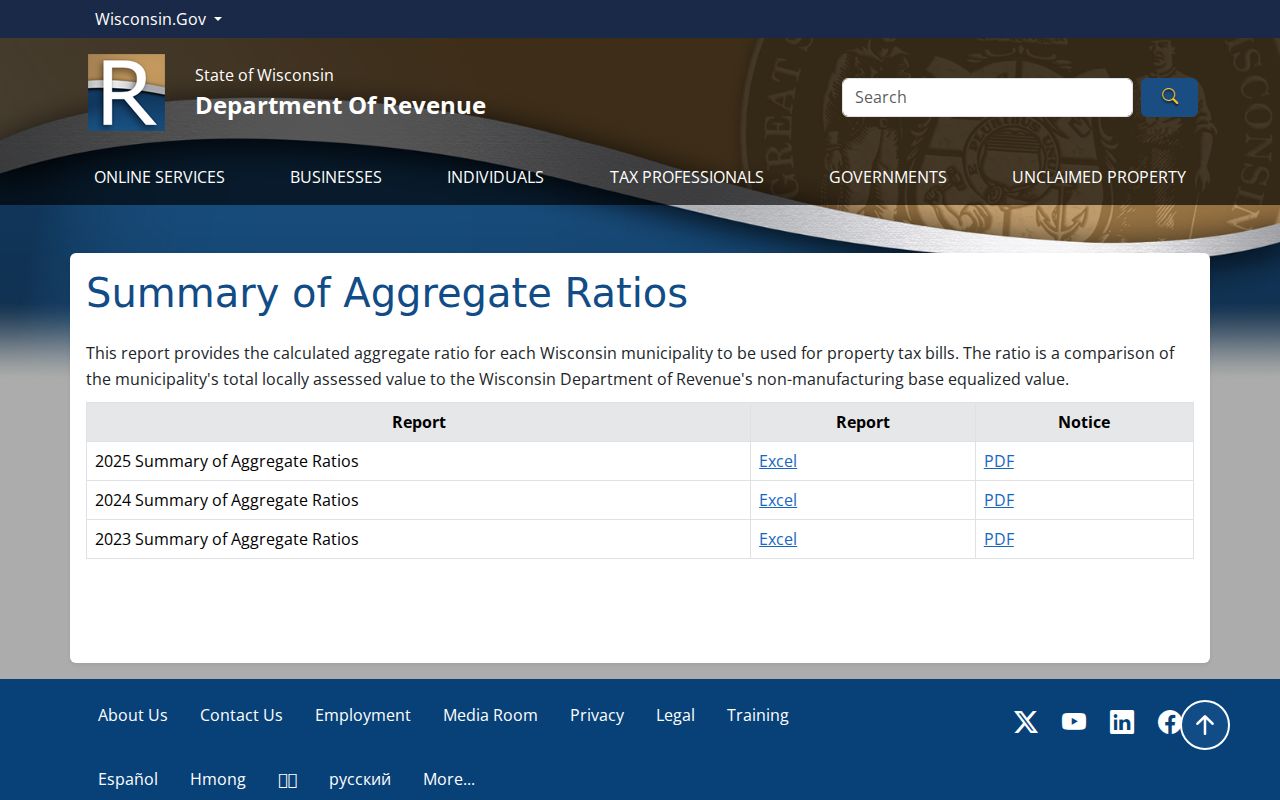
Use the report for municipal context, then ask the assessor about the parcel-specific record.
Walworth County Tax Exemption Flags Need Local Confirmation
Never infer an exemption from a blank or abbreviated portal field. Walworth County publishes no countywide exemption code, and Ascent offers no fixed list of flags. Classification and eligibility questions go to the local assessor. Bill and payment questions belong with the office that collects for that municipality. Keep the tax year and parcel key handy with any request.
This separation keeps an assessment question from getting tangled with an account-balance question. A property tax record shows the assessed amount; a bill shows charges for a period. A special classification can affect part of the process. It does not touch the recorded deed. The parcel boundary stays the same. So does the sale price.
Find a Walworth County Property Tax Bill by Parcel
Start with the parcel. Search Ascent by address or owner of record. Use OneView when the address is unclear. Once you have the tax key, take it to the tax lookup. Then select the bill period you need. Keep assessed value and the billed amount distinct. They answer different questions.
For payment status, rely on the record kept by the responsible treasurer. Walworth County does not offer one countywide payment portal, and refresh schedules vary. Confirm the current route with the local office before relying on a balance shown online.
- Use an address or tax key to identify the parcel in Ascent.
- Check the bill year and distinguish assessed value from the amount due.
- Confirm any exemption or classification with the municipal assessor.
- Ask the municipal treasurer about payment status, delinquency, or a receipt.
- Assessed value
- The value assigned in the assessment roll for tax purposes.
- Assessment level
- A municipal comparison measure published by Wisconsin DOR, not one parcel's appraisal.
- Tax levy
- The amount raised by a taxing jurisdiction and reflected in bill calculations.
- Delinquent tax
- An unpaid amount; it is not by itself a court foreclosure judgment.
Walworth County Tax Records Are a Snapshot of a Bill Period
Every Walworth County tax record belongs to a period and a roll. A deed recorded last month may not show up in the newest tax display. A fresh appraisal may not revise older bills. Check the record year carefully. Compare the access date too.
The owner, mailing address, or situs fields may disagree. Compare the legal description, and ask the municipal assessor which roll is current. The tax roll answers what was assessed and billed for a stated year. For a transfer date or grantee, consult the deed records instead. For boundaries, pull the recorded plat or survey. Keeping these routes separate keeps an old roll from masquerading as current title evidence.
Delinquent Walworth County Taxes and Court Cases Are Separate
An unpaid tax balance is not a court case. The tax bill shows what is owed and whether payment posted. A foreclosure docket shows a proceeding that was filed and its events. That is a different record entirely.
Wisconsin Circuit Court Access offers public case information. Documents and transcripts usually require a request to the Walworth County Clerk of Circuit Court. Sealed or confidential matters never appear in public results.
When a tax question grows into a title or court question, match the parcel description and party names across the bill, the deed index, and the docket. A delinquency notation alone does not mean the property transferred. It also does not mean a foreclosure finished. Treat each record as one piece of the larger picture.
How to Question a Walworth County Assessment
Wisconsin gives property owners a clear path when they disagree with an assessment. Everything starts with the assessment notice. Read it alongside the instructions your municipality publishes for the current year. Local meeting dates and filing steps vary from town to town. Then talk to the assessor. Ask how the value was built. Ask which property characteristics and recent sales shaped it. Ask what proof the Board of Review will actually accept. Keep your assessment year, the property description, and the parcel number handy. Nothing stalls over missing details.
Strong evidence speaks to value, not to the size of the tax bill. A higher bill can simply mean a levy or district changed. That argument goes nowhere. A deed record of a recent sale can help. But it only works if its terms and the comparability of the property hold up. Wisconsin DOR's owner guide walks through assessment ratios, market value, notices, and objections. Your municipality supplies the local calendar and the paperwork deadlines for Walworth County parcels.
Check the local notice. Follow the current municipality's objection and Board of Review calendar. Research did not capture one countywide filing deadline, so confirm the date and evidence rules with the assessor before filing.